Ban Chiang: Udon Thani's UNESCO Village of 5,000-Year-Old Painted Pots
Fifty-five kilometres east of Udon Thani city, farmers in the village of Ban Chiang used to turn up red-painted potsherds every time they dug a fence post. In 1966 an American student, Steve Young, tripped on a tree root, looked down at the pottery fragments at his feet, and started asking questions. The answers rewrote Southeast Asian prehistory. Ban Chiang proved to be a settlement and burial ground used for thousands of years, with some of the earliest evidence of bronze working and rice farming in the region. UNESCO made it a World Heritage Site in 1992 — one of the most important archaeological sites in Southeast Asia, hiding in an ordinary Isan village.
The Red-on-Buff Pottery
Ban Chiang's signature is its pottery: elegant vessels in warm buff clay, painted with bold red spirals, whorls and geometric bands. The most famous pieces date from roughly 300 BC to AD 200, the late period of the culture, but the sequence underneath runs far deeper — plain cord-marked pots, then black incised ware, then the painted masterpieces on top. In the museum you can follow the whole 5,000-year learning curve in a single walk, from a farmer's first fired pot to art good enough for any modern gallery.

Photo: Kiwiodysee, CC BY-SA 3.0, Wikimedia Commons
The National Museum
The Ban Chiang National Museum, at the edge of the village, tells the story properly. Galleries cover the discovery, the excavations of the 1970s, and the three great periods of Ban Chiang culture, with skeletons, bronze spearheads, iron tools, glass beads and clay rollers displayed in context. Dioramas show a Bronze Age smith at work and villagers painting pots — a reminder that this was not a lost city of kings, but a farming community that got very, very good at making things. Allow at least an hour; history lovers will take two.
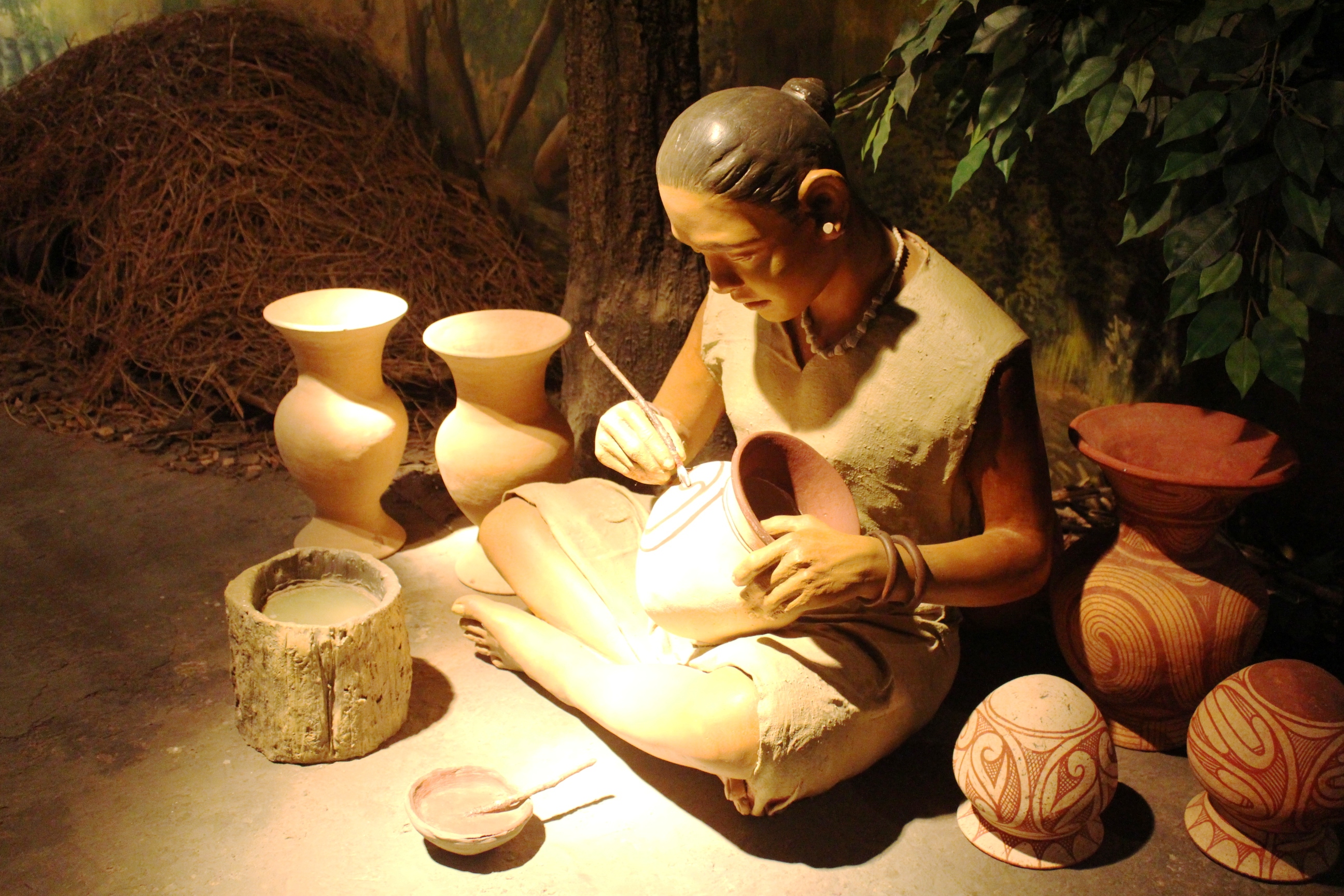
Photo: Kiwiodysee, CC BY-SA 3.0, Wikimedia Commons
The Dig Pit at Wat Pho Si Nai
Seven hundred metres from the museum, inside the grounds of Wat Pho Si Nai temple, an open excavation pit has been preserved under a roof exactly as the archaeologists left it. Look down and you are looking at layered burials: skeletons curled with their pots, bronze and belongings placed beside them thousands of years ago. It is Thailand's first open-air site museum, and standing over a grave goods assemblage older than Rome concentrates the mind wonderfully. Entry is included with the museum ticket.

Photo: Kiwiodysee, CC BY-SA 3.0, Wikimedia Commons
The Village Today
Ban Chiang village has embraced its fame gracefully. Local potters still make and paint reproduction Ban Chiang ware — a hand-painted pot typically costs ฿100–800 depending on size — and a painting workshop lets you try the spiral designs yourself. Combine the trip with lunch at a village restaurant (grilled chicken, som tam and sticky rice, typically ฿150–250 a head) and you have Udon Thani's essential half-day out.
Practical Information
| Museum entry, foreign adult | Typically ฿150 |
| Museum entry, Thai adult | Typically ฿30 |
| Bus Udon Thani to Ban Chiang | Typically ฿50–70 |
| Songthaew / taxi charter from Udon Thani, half day | Typically ฿800–1,200 |
| Hand-painted reproduction pot | Typically ฿100–800 |
| Pottery painting workshop | Typically ฿100–200 |
The museum opens daily, typically 9am to 4pm. Buses toward Sakon Nakhon on Highway 22 drop you in Ban Chiang village. Drivers should allow about an hour each way from Udon Thani city.
— ภาษาไทย —
บ้านเชียง: หมู่บ้านมรดกโลกของอุดรธานี กับหม้อลายเขียนสีอายุ 5,000 ปี
ห่างจากตัวเมืองอุดรธานีไปทางตะวันออก 55 กิโลเมตร ชาวบ้านบ้านเชียงเคยขุดพบเศษหม้อลายเขียนสีแดงทุกครั้งที่ขุดหลุมเสารั้ว ในปี พ.ศ. 2509 สตีฟ ยัง นักศึกษาชาวอเมริกัน สะดุดรากไม้และก้มลงมองเศษเครื่องปั้นดินเผาที่เท้าของเขา แล้วเริ่มตั้งคำถาม คำตอบเหล่านั้นเปลี่ยนประวัติศาสตร์ยุคก่อนประวัติศาสตร์ของเอเชียตะวันออกเฉียงใต้ไปตลอดกาล บ้านเชียงพิสูจน์ว่าเป็นแหล่งที่อยู่อาศัยและสุสานที่ใช้ต่อเนื่องหลายพันปี พร้อมหลักฐานการหล่อสำริดและการปลูกข้าวที่เก่าแก่ที่สุดแห่งหนึ่งในภูมิภาค ยูเนสโกขึ้นทะเบียนเป็นมรดกโลกในปี พ.ศ. 2535 ที่นี่คือหนึ่งในแหล่งโบราณคดีที่สำคัญที่สุดของเอเชียตะวันออกเฉียงใต้ ซ่อนตัวอยู่ในหมู่บ้านอีสานธรรมดา ๆ
เครื่องปั้นดินเผาลายแดงบนพื้นครีม
เอกลักษณ์ของบ้านเชียงคือเครื่องปั้นดินเผา ภาชนะรูปทรงงดงามในเนื้อดินสีครีมอุ่น เขียนลายสีแดงเป็นวงก้นหอย ลายโค้ง และแถบเรขาคณิต ชิ้นที่มีชื่อเสียงที่สุดมาจากช่วงประมาณ 300 ปีก่อนคริสตกาลถึง ค.ศ. 200 ซึ่งเป็นยุคปลายของวัฒนธรรม แต่ชั้นที่อยู่ลึกลงไปนั้นเก่ากว่ามาก เริ่มจากหม้อลายเชือกทาบเรียบ ๆ ต่อด้วยเครื่องปั้นสีดำลายขูดขีด และปิดท้ายด้วยงานเขียนสีชั้นครูที่อยู่ชั้นบนสุด ในพิพิธภัณฑ์ คุณสามารถเดินตามเส้นทางการเรียนรู้ตลอด 5,000 ปีได้ในเที่ยวเดียว จากหม้อใบแรกของชาวนาสู่ผลงานศิลปะที่ดีพอสำหรับแกลเลอรีสมัยใหม่
พิพิธภัณฑสถานแห่งชาติบ้านเชียง
พิพิธภัณฑสถานแห่งชาติบ้านเชียงที่ขอบหมู่บ้านเล่าเรื่องราวอย่างครบถ้วน ห้องจัดแสดงครอบคลุมการค้นพบ การขุดค้นในทศวรรษ 2510 และสามยุคใหญ่ของวัฒนธรรมบ้านเชียง พร้อมโครงกระดูก หัวหอกสำริด เครื่องมือเหล็ก ลูกปัดแก้ว และลูกกลิ้งดินเผาที่จัดแสดงตามบริบท ภาพจำลองแสดงช่างหล่อสำริดยุคสำริดกำลังทำงานและชาวบ้านกำลังเขียนลายหม้อ เตือนใจว่าที่นี่ไม่ใช่เมืองหลวงของกษัตริย์ที่สาบสูญ แต่เป็นชุมชนชาวนาที่เก่งกาจในการประดิษฐ์สิ่งของอย่างยิ่ง เผื่อเวลาอย่างน้อยหนึ่งชั่วโมง คนรักประวัติศาสตร์อาจใช้ถึงสองชั่วโมง
หลุมขุดค้นที่วัดโพธิ์ศรีใน
ห่างจากพิพิธภัณฑ์ 700 เมตร ภายในวัดโพธิ์ศรีใน มีหลุมขุดค้นเปิดโล่งที่อนุรักษ์ไว้ใต้หลังคาในสภาพเดิมเหมือนวันที่นักโบราณคดีจากไป เมื่อมองลงไป คุณกำลังมองสุสานชั้นแล้วชั้นเล่า โครงกระดูกนอนงอพร้อมหม้อของพวกเขา สำริดและข้าวของวางไว้ข้างกายเมื่อหลายพันปีก่อน ที่นี่คือพิพิธภัณฑ์กลางแจ้งแห่งแรกของประเทศไทย และการได้ยืนเหนือข้าวของในหลุมศพที่เก่ากว่ากรุงโรมทำให้สมาธิจดจ่อได้อย่างน่าอัศจรรย์ ค่าเข้าชมรวมอยู่ในตั๋วพิพิธภัณฑ์แล้ว
หมู่บ้านในวันนี้
หมู่บ้านบ้านเชียงรับชื่อเสียงของตนอย่างสง่างาม ช่างปั้นท้องถิ่นยังคงปั้นและเขียนลายหม้อแบบบ้านเชียงจำลอง หม้อเขียนลายด้วยมือราคาโดยทั่วไป 100–800 บาทตามขนาด และมีเวิร์กช็อปให้คุณลองเขียนลายก้นหอยด้วยตัวเอง รวมทริปนี้เข้ากับอาหารกลางวันที่ร้านในหมู่บ้าน ไก่ย่าง ส้มตำ และข้าวเหนียว โดยทั่วไปคนละ 150–250 บาท แล้วคุณจะได้ทริปครึ่งวันที่ห้ามพลาดของอุดรธานี
ข้อมูลสำหรับผู้มาเยือน
ค่าเข้าพิพิธภัณฑ์ ชาวต่างชาติผู้ใหญ่โดยทั่วไป 150 บาท คนไทยผู้ใหญ่โดยทั่วไป 30 บาท รถบัสจากอุดรธานีไปบ้านเชียงโดยทั่วไป 50–70 บาท เหมาสองแถวหรือแท็กซี่จากอุดรธานีครึ่งวันโดยทั่วไป 800–1,200 บาท หม้อจำลองเขียนลายด้วยมือโดยทั่วไป 100–800 บาท เวิร์กช็อปเขียนลายหม้อโดยทั่วไป 100–200 บาท พิพิธภัณฑ์เปิดทุกวัน โดยทั่วไป 9.00–16.00 น. รถบัสสายสกลนครบนทางหลวงหมายเลข 22 จะจอดให้ลงที่หมู่บ้านบ้านเชียง ผู้ขับรถเองควรเผื่อเวลาประมาณหนึ่งชั่วโมงต่อเที่ยวจากตัวเมืองอุดรธานี


Comments
Post a Comment